


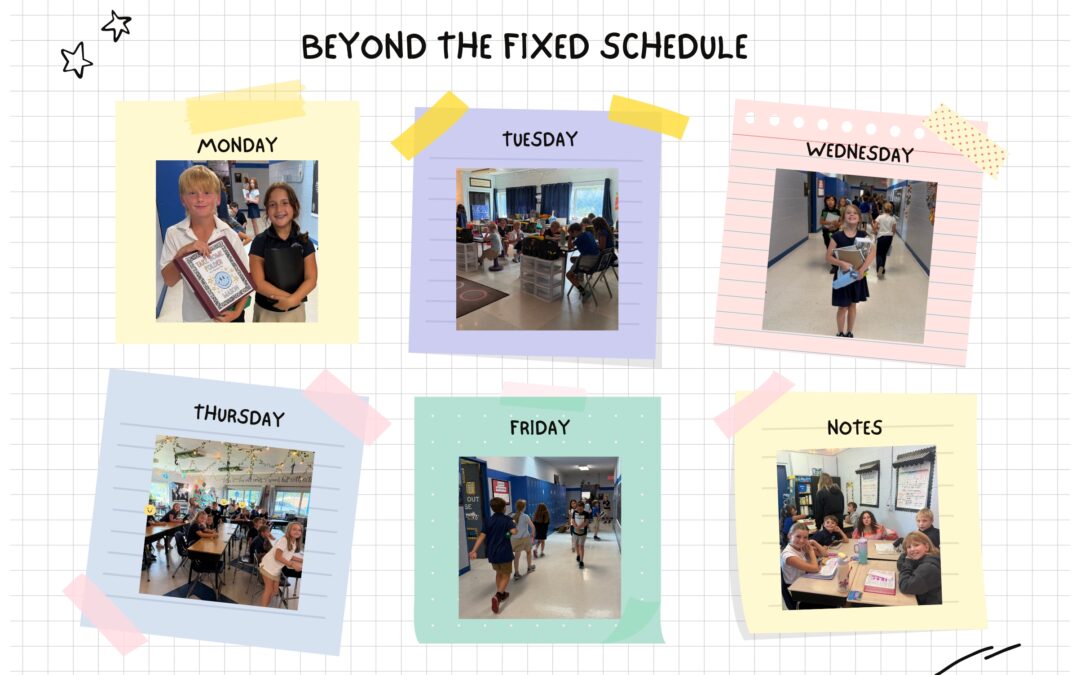
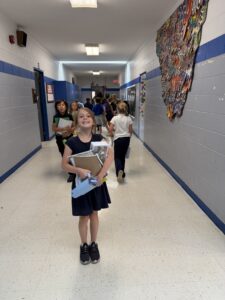
When prospective families walk through Knoxville Christian School hallways during campus tours, one of the most frequent questions we receive centers on our upper elementary grades. Visitors often notice third-, fourth-, and fifth-graders carrying their binders, packing up their supplies, and walking down the hall to switch classrooms between periods.
To many parents, seeing eight- to eleven-year-olds change teachers and subjects several times throughout the school day looks remarkably similar to a middle or high school schedule. Parents naturally wonder why we introduce departmentalized classes with specialized teachers at such a young age, and how this daily structure benefits elementary children.
At Knoxville Christian School, our upper elementary model is intentionally designed to bridge the gap between early childhood foundational learning and the independence required in secondary education. By matching dedicated educators with their primary academic passions—whether in Mathematics, Science and Social Studies, or English Language Arts—we provide deeper, subject-specific instruction tailored to students’ growing cognitive abilities.
Bobby Simpson, Head of School, says, “One of the things I value most about Knoxville Christian School is our ability to do things differently when doing so better serves our students…Rather than feeling obligated to follow traditional educational models simply because that is how things have always been done.” Mr. Simpson explains that KCS actively embraces the unique opportunities its size provides. He notes that the departmentalized approach in grades three, four, and five is a prime example of that philosophy, allowing KCS to be intentional about instruction, capitalize on teachers’ strengths, and provide students with an educational experience that is both challenging and supportive. In his view, school size is never a limitation, but an opportunity to leverage every advantage to help each student grow academically, personally, and spiritually.
However, our commitment to educational excellence does not stop at departmentalization. Starting in third grade, Knoxville Christian School takes this model a step further by rotating our core academic blocks on a dynamic quarterly schedule.
The Science of Focus: Why We Rotate Core Academic Blocks
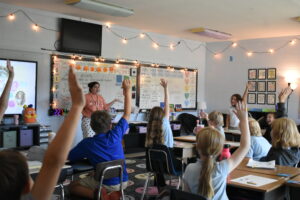 If you think back to your own school days, you might recall having math first thing every morning or history right after lunch for an entire school year. While many schools use traditional fixed schedules, educational data and child development research tell a more nuanced story about how young minds absorb information throughout the day.
Children do not maintain the same level of mental sharpness from eight in the morning until three in the afternoon. Early-morning grogginess, pre-lunch hunger, and the mid-afternoon energy slump all affect how students engage with complex material. When a subject stays locked into a single time slot for ten consecutive months, that discipline consistently inherits the challenges of that time period.
To solve this, Knoxville Christian School rotates the order of core academic blocks at the start of each new quarter. When third-, fourth-, and fifth-grade students return from Fall Break to begin Quarter 2, their subject order shifts forward. A grade that began Quarter 1 with English Language Arts in Block 1, Mathematics in Block 2, and Science or Heritage Studies in Block 3 transitions into Quarter 2 with Mathematics first, followed by Science or Heritage Studies, and ending the day with English Language Arts. This rotation continues systematically through Quarters 3 and 4.
Elementary Vice Principal Kevin Ickles explains that aligning class schedules with natural circadian rhythms gives every subject an equal chance to be taught during peak cognitive hours. As Mr. Ickles observes, “rotating the schedule ensures no single subject is permanently stuck during the morning grogginess period or the after-lunch slump, allowing every discipline to eventually fall during the mid-morning hours when students show their highest levels of focus and academic performance.”
Combating Fatigue and Ensuring Fairness Across Disciplines
 The benefits of quarterly schedule rotation extend well beyond morning alertness. Seeing the same subjects in the identical sequence day after day can lead to routine boredom and mental fatigue for elementary students. Starting each quarter with a fresh schedule order keeps the academic week dynamic and helps students maintain sharper attention spans throughout the year.
Furthermore, the quarterly rotation creates structural fairness across all academic disciplines. End-of-day periods in any school setting naturally contend with tired students, end-of-day announcements, and occasional early dismissals for extracurricular activities or medical appointments. In a fixed schedule, the final subject of the day bears the brunt of these unavoidable interruptions for an entire year.
By rotating the block order every nine weeks, KCS keeps instructional time, student energy, and daily attendance balanced across Mathematics, Science, Heritage Studies, and Language Arts. Each subject gets its turn during the prime learning window, and no single academic area falls behind because of afternoon fatigue.
A Dual Perspective: Leadership and Parenthood
 What makes this innovative approach so meaningful at Knoxville Christian School is that it is championed by educators who see its impact firsthand both at work and at the dinner table.
Mr. Ickles, who serves as Elementary Vice Principal while also raising a fifth grader at KCS, says he is deeply grateful that school leadership and teachers are united and willing to follow the data to do what is truly in students’ best interest and supports their learning outcomes. He notes that too often schools follow the same routine simply because that is what they have always done. In contrast, Knoxville Christian School uses its unique size as a strength to serve students and families to the best of its ability.
This shared commitment from Mr. Simpson, Mr. Ickles, and the entire elementary faculty reflects the heart of KCS. We do not default to tradition for tradition’s sake. Instead, we continually evaluate our practices, follow the data, and leverage our agile community and small class sizes to implement research-backed strategies that optimize student achievement, personal confidence, and spiritual growth.
Preparing Confident, Adaptable Learners
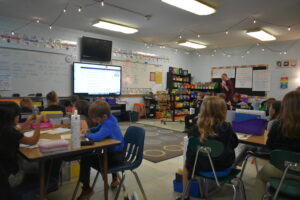 Transitioning between specialized teachers and navigating a rotating schedule gives our third-, fourth-, and fifth-grade Knights a distinct advantage. As they learn to manage their time, organize their materials for different subjects, and adapt to changing daily routines, they develop crucial executive function skills in a supportive, Christ-centered environment.
When our elementary students eventually step across the hall into middle school, they do so with quiet confidence. They are already comfortable with departmentalized learning, accustomed to switching classes, and adept at managing diverse academic expectations. Most importantly, they know their teachers and administrators see them as whole individuals and design every part of their school day to help them succeed.
Experience Upper Elementary at Knoxville Christian School
Curious how our departmentalized upper elementary program and rotating schedules can benefit your child? We invite you to see our vibrant classrooms in action! Whether you are exploring options for third grade or preparing for middle school, our team is eager to welcome your family. Contact our Admissions Office today to discover how Knoxville Christian School nurtures intellect, character, and faith in every student.